Feeling bloated after meals is one of the most common digestive complaints I hear in clinic.
Some people describe it as:
“My stomach feels tight.”
“I look six months pregnant after dinner.”
“I feel full after only a few bites.”
“Healthy food seems to make it worse.”
And here’s the important part:
Bloating is not a diagnosis. It’s a symptom.
Sometimes it is simply related to meal size, eating speed, or certain foods.
But persistent bloating can also be linked to underlying digestive conditions such as functional dyspepsia, irritable bowel syndrome (IBS), altered gut motility, food sensitivities, stress, or changes in the gut microbiome.
In this article, I’ll walk you through the most common causes of bloating, what your symptoms may be telling you, and when it’s worth getting properly assessed.
1. You may be eating too fast
Digestion starts before food reaches your stomach.
Eating quickly, rushing meals, or eating under stress can lead to:
swallowing excess air
poorer chewing
reduced digestive signalling
more post-meal pressure and fullness
Many people notice bloating improves simply by slowing down.
Try:
putting your fork down between bites
chewing properly
sitting down without screens
taking 5 slow breaths before meals
2. Functional dyspepsia (the “burn and bloat” syndrome)
Many people with persistent upper abdominal bloating may actually have functional dyspepsia, a common digestive condition affecting an estimated 10 to 30% of adults worldwide. Many have a completely normal endoscopy.
Common symptoms include:
upper abdominal fullness
feeling full after only a few bites
bloating after meals
burning or pressure in the upper stomach
nausea or burping
Research suggests this may involve altered stomach emptying, visceral hypersensitivity, microbiome changes, and low-grade inflammation.
If you often feel bloated after small meals or uncomfortably full for hours, this may be relevant.
Many people with functional dyspepsia also experience reflux, burping, or burning behind the breastbone. If reflux is part of your picture, you may also find my article on what causes acid reflux and what your body may be trying to tell you helpful.
3. IBS and disorders of gut-brain interaction
Bloating is also one of the hallmark symptoms of IBS.
Common signs include:
bloating that changes during the day
gas and abdominal pressure
constipation, diarrhoea, or both
symptoms linked to stress
symptoms linked to specific foods
Interestingly, many people have overlap between IBS and functional dyspepsia.
One study found around 45% of people with functional dyspepsia also met criteria for IBS.
4. Food triggers may not be as simple as “intolerance”
Many patients say:
“I’m bloated even when I eat healthy.”
That makes sense.
Foods commonly associated with bloating include:
onions
garlic
wheat
beans
apples
dairy
protein bars
sugar alcohols
Some people react to fermentable carbohydrates.
Others may react through more complex immune or gut-brain pathways.
Emerging research suggests meal-related symptoms in IBS and functional dyspepsia may involve:
mast cell activation
eosinophils
histamine release
altered intestinal permeability
microbiome interactions
This is why random food elimination often fails.
5. Constipation may be the hidden driver
You do not need to “feel constipated” to be backed up.
Even regular bowel movements do not always mean complete emptying.
Signs include:
lower abdominal pressure
bloating that worsens throughout the day
incomplete evacuation
straining
pellet-like stools
If constipation contributes to your bloating, kiwi is one of the most researched fruits for supporting bowel regularity and digestive comfort. Read more about the science-backed health benefits of kiwi fruit.
6. Low stomach acid or acid suppression
Long-term use of acid-suppressing medications may alter digestion and gut ecology in some people.
In certain individuals, reduced gastric acidity may affect:
protein digestion
mineral absorption
B12 absorption
microbial balance
This does not mean medication should be stopped without medical advice.
But it may be worth reviewing long-term use with your doctor.
7. Gut microbiome changes
Research increasingly links bloating to changes in the small intestine and upper gut microbiome.
Studies in functional dyspepsia have found:
microbiome imbalance
increased intestinal permeability
low-grade immune activation
8. Stress changes digestion more than most people realise
Your nervous system strongly affects:
stomach emptying
enzyme release
gut sensitivity
muscle contractions
intestinal barrier function
This is why many people notice:
“I can eat the same meal on holiday and feel fine.”
Stress is not “all in your head.” It changes physiology.
Digestive symptoms often flare during periods of poor sleep, chronic stress, travel, or intense work demands. If sleep is part of your picture, my article on practical sleep strategies inspired by Why We Sleep may help.
9. Sometimes bloating needs medical investigation
Please speak with your doctor if bloating comes with:
unexplained weight loss
vomiting
difficulty swallowing
blood in stool
anaemia
waking at night with pain
persistent symptoms after age 55–60
rapidly worsening symptoms
In some cases testing for:
Helicobacter pylori
coeliac disease
inflammatory bowel disease
pancreatic insufficiency
structural GI disease
may be appropriate. Functional dyspepsia guidelines recommend H. pylori testing in appropriate patients.
What actually helps bloating?
Treatment depends on the cause, but may include:
meal pattern changes
slower eating
identifying food triggers
bowel habit optimisation
stress regulation
targeted probiotics
in some cases digestive enzymes, which have shown benefit in selected post-meal symptom patterns in some studies.
There is rarely one universal “anti-bloating supplement.”
The goal is to understand why your body is bloating in the first place.
Can probiotics help with bloating?
In some people, yes.
While probiotics are not a universal fix, emerging research suggests that specific strains may help reduce gas-related symptoms such as bloating, burping, and flatulence.
In a 2022 randomized placebo-controlled trial, healthy adults taking Bacillus subtilis BS50 daily for 6 weeks were more likely to report improvements in bloating-related symptoms compared with placebo.
That said, probiotic effects are strain-specific.
A product that helps one person may do very little for another.
In clinical practice, probiotics work best when chosen based on:
your symptom pattern
bowel habits
food triggers
recent antibiotic use
stress load
underlying digestive conditions
Before reaching for digestive enzymes, probiotics, or anti-bloating supplements, I usually start somewhere simpler:
food, meal habits, and nervous system regulation first.
Supplements can absolutely play a role, but they rarely fix bloating on their own if the underlying triggers are still there.
It’s the same philosophy I use throughout my practice:
Food & lifestyle first. Supplements when they genuinely add value.
How I can support you
If bloating is affecting your energy, confidence, training, work, or family life, I work with busy professionals, parents, and athletes in Barcelona and online to identify what is actually driving digestive symptoms and build a practical plan around food, lifestyle, and gut health.
Book a free 15-minute call or message me directly on WhatsApp.
A Quick Visual Guide to Chronic Bloating
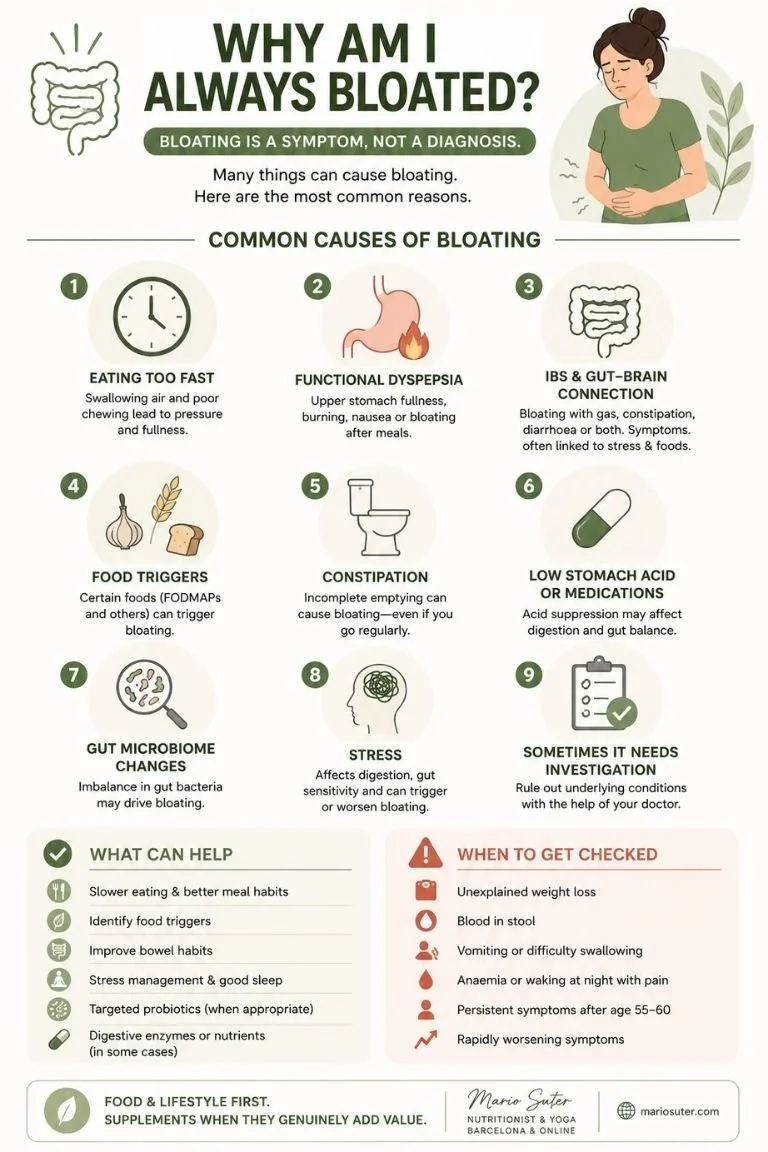
Pin or save this quick reference guide to help track down your everyday bloating triggers! Be sure to consult a healthcare professional if your symptoms persist.
FAQ
Why am I bloated even when I eat healthy?
Bloating is not always about eating “bad” food. Even healthy foods such as beans, onions, apples, dairy, or high-fibre meals can trigger symptoms in some people.
Why do I feel bloated after only a few bites?
Feeling unusually full after small meals may be linked to functional dyspepsia, reflux, or altered stomach emptying.
Can stress really cause bloating?
Yes. Stress can affect stomach emptying, gut sensitivity, digestion, and bowel movements.
Can probiotics help with bloating?
In some people, yes. Certain probiotic strains may help reduce bloating, burping, and gas-related symptoms.
When should bloating be medically investigated?
Please speak with your doctor if bloating is persistent or comes with weight loss, vomiting, blood in the stool, anaemia, or worsening symptoms.
View scientific references
Tuteja A, Talley NJ, Joos SK, Tolman KG, Hickam DH. (2008). Abdominal bloating in employed adults: prevalence, risk factors, and association with other bowel disorders . American Journal of Gastroenterology, 103(5), 1241–1248.
Garvey SM, Mah E, Blonquist TM, Kaden VN, Spears JL. (2022). The probiotic Bacillus subtilis BS50 decreases gastrointestinal symptoms in healthy adults: a randomized, double-blind, placebo-controlled trial . Gut Microbes, 14(1).
Graham DY, Ketwaroo GA, Money ME, Opekun AR. (2018). Enzyme therapy for functional bowel disease-like post-prandial distress . Journal of Digestive Diseases, 19(11), 650–656.
Suzuki H. (2021). Recent advances in the definition and management of functional dyspepsia . Keio Journal of Medicine, 70(1), 7–18.
Ford AC, Staudacher HM, Talley NJ. (2024). Postprandial symptoms in disorders of gut-brain interaction and their potential as a treatment target . Gut, 73(7), 1199–1211.