Most padel players know this feeling: you start a match sharp, moving well, making good decisions. Then halfway through, the energy dips, your reactions slow down and the unforced errors start creeping in.
I see this in clinic and on court. I play regularly here in Barcelona, and the same pattern shows up in longer sessions, late-evening matches and back-to-back games. Very often, what you ate (or didn’t eat) is the missing piece.
The good news: padel nutrition doesn’t need to be complicated. Whether you’re playing a social match with friends, a league game or a full tournament day, a few simple habits can help you keep your energy, recover faster and play more consistently.
If you play regularly and want a plan built around your own matches and routine, you can learn more about my sports nutrition support in Barcelona and online.
Quick answer: Eat a carbohydrate-based meal with some protein 2-3 hours before padel, such as rice with chicken or oats with yoghurt and fruit. Short on time? Have a banana, dates or a yoghurt 30-60 minutes before. Start well hydrated, sip water during play, and eat protein plus carbohydrates within two hours after.
🎾 Padel Match-Day Nutrition Cheat Sheet
Oats, rice, pasta, potatoes, bread, fruit, plus lean protein
Banana, dates, yoghurt, rice cakes
Proper snack around 6pm: bocadillo, yoghurt with fruit and granola, or rice cakes with nut butter and banana
Fruit, dates, smoothie, energy balls, sports drink
500-700 ml water 1-2 hours before, then sip at every change of ends
Protein plus carbohydrates within 1-2 hours, and plenty of fluids
What to Eat Before a Padel Match
Your pre-match meal has one job: to top up your energy without sitting heavy in your stomach. That means mostly carbohydrates, a moderate amount of protein, and not too much fat or fibre in the last couple of hours.
Good pre-padel options include:
Oats with yoghurt and fruit: ideal 2-3 hours before
Rice or pasta with chicken, fish or eggs: a great lunch before an afternoon match
Wholegrain toast with honey or eggs: easy to digest and quick to make
Bananas or dates: fast carbohydrates and potassium, perfect 30-60 minutes before
A simple energy bar or energy balls: handy in your padel bag
What to Eat Before Padel, by Match Time
When you play changes what you should eat. This is where I see most players go wrong, especially with the late matches we play here in Spain.
Morning match (9-10am)
Have a light breakfast 1.5-2 hours before: oats with banana, or toast with honey and a yoghurt. If you’re playing straight after waking up, a banana and a coffee is enough. Then have a proper breakfast after the match.
Lunchtime or afternoon match
Eat a normal breakfast, then a light carbohydrate-based snack 1-2 hours before you play, such as a small sandwich, yoghurt with fruit or rice cakes with banana. Save your main lunch for after the match.
Evening match (8-10pm)
This is the classic Barcelona timing, and the trickiest one. Lunch is long gone and dinner comes afterwards. Many players arrive on court having eaten nothing for six or seven hours.
The fix is a proper merienda around 6pm: a bocadillo with a lean filling, yoghurt with fruit and granola, or rice cakes with nut butter and banana. After the match, eat a light dinner with protein and carbohydrates. Avoid a huge late meal, as it can disturb your sleep and slow your recovery. If late dinners are a regular part of your week, my guide to eating well in Barcelona has more practical ideas.
What Should I Eat on Padel Days?
Carbohydrates (your main fuel)
Carbohydrates keep you moving, reacting and making sharp decisions on court. They are your muscles’ preferred fuel during repeated sprints, quick changes of direction and long rallies.
Earlier in the day, focus on complex carbohydrates such as oats, rice, potatoes, sweet potatoes, quinoa, wholegrain pasta, sourdough bread and fruit. Closer to match time, simpler and lower-fibre options like bananas, white bread, rice cakes or dates tend to sit better.
One of the most common issues I see in recreational players is under-eating carbohydrates while trying to “eat healthy”, then wondering why their energy and recovery suffer.
Protein (recovery and repair)
Protein supports muscle repair and recovery and helps you handle a busy week of matches. Aim for roughly:
1.2-1.4 g per kg of bodyweight per day if you play casually
1.4-1.8 g per kg per day if you play often, compete or also do strength training
Spread it across 3-5 meals. Good sources include eggs, Greek yoghurt, chicken, fish, cottage cheese, tofu, lentils, beans and, where it helps, a protein shake.
Fats (keep them moderate before play)
Healthy fats from olive oil, avocado, nuts, seeds, eggs and oily fish are important for your overall health. Just keep portions moderate in the hours before playing, as large amounts slow digestion and can leave you feeling heavy on court.
Why Nutrition Matters in Padel
Padel looks relaxed from the outside, but it asks a lot of your body and brain at the same time: short high-intensity efforts, constant changes of direction, tactical decisions, communication with your partner and long rallies that need focus.
Research on match play shows that padel players typically work at around 70-80% of their maximum heart rate, with mostly moderate intensity punctuated by short, explosive efforts. In other words, padel is mainly an aerobic sport with lots of bursts. That’s why steady energy across the whole match matters more than one big “boost”.
Energy rarely disappears all at once. Instead, you notice:
Slower reactions at the net
Questionable shot choices
More unforced errors
Losing consistency in the third set
The goal isn’t just to start strong. It’s to still be sharp at 5-5 in the final set.
Do You Need to Eat During a Padel Match?
For most social matches of 60-90 minutes, no. A good pre-match meal and regular sips of water are usually enough.
Eating during play becomes useful when:
Your match lasts longer than about 90 minutes
You’re playing back-to-back matches or a tournament
It’s hot and you’re sweating a lot
You haven’t eaten well beforehand (hello, 9pm matches)
In those cases, small amounts work best: half a banana, a couple of dates, a few sips of a sports drink. The aim is to keep your blood sugar steady, not to feel full.
What to Eat During a Padel Tournament
Tournament days are where nutrition makes the biggest difference. Many players either eat too little between matches or choose food that’s too heavy.
Before the first match: a carbohydrate-rich meal 2-3 hours before, plus a light snack 30-60 minutes before if you need it.
Between matches: think steady input, not big meals. Good options include fruit, bananas, dates, smoothies, rice cakes, energy balls, small sandwiches and yoghurt.
Avoid: large meals, fried or very fatty food, and long gaps without eating.
The goal is to prevent the energy crash before it happens.
Hydration and Playing Padel in the Heat
Even mild dehydration can affect your concentration, coordination and decision-making.
Drink 500-700 ml of water 1-2 hours before your first match
Sip regularly during play, ideally at every change of ends
Keep drinking after the match until you feel back to normal
Summer in Spain changes things. Outdoor courts in July and covered clubs without much air can make you sweat far more than you think. In these conditions, or if you play long sessions, sweat heavily or tend to cramp, electrolytes can be genuinely useful. Most casual players do well with water alone, as long as they start hydrated.
➟ Not sure if you need them? Read my guide: What Are Electrolytes... And Do You Actually Need Them?
Caffeine Before Padel
A coffee 30-60 minutes before playing can improve alertness, reaction time and perceived effort, and the research on caffeine and performance is strong. Stick with an amount you already know you tolerate, and don’t try a big new dose on match day.
One caution for evening players: caffeine stays in your system for hours. A strong coffee before a 9pm match can cost you sleep, and sleep is where much of your recovery happens. For timing and dosage, see my guide to caffeine for performance.
What to Avoid Before Padel (Common Mistakes)
Eating a big meal within 60-90 minutes of playing
Heavy, fatty or fried food right before a match
Long gaps without eating, especially before evening matches
Not hydrating early enough
Relying on sugary snacks and energy drinks alone
Lots of alcohol the night before
Trying new foods or supplements on match day
Recovery After Padel
Within 1-2 hours after playing, aim for both protein and carbohydrates. This helps repair muscle, refill your energy stores and get you ready for your next session.
Simple options:
Greek yoghurt with fruit
Protein shake and a banana
Chicken and rice
Omelette with potatoes or sweet potatoes
Fish with potatoes and vegetables
What about the post-match beer?
Let’s be honest, the caña after padel is part of the culture, and the social side matters too. One beer is unlikely to undo your recovery, especially if you drink water and eat a proper meal first. Larger amounts of alcohol can slow muscle recovery and disturb your sleep, so go easy if you’re playing again the next day.
Supplements (Keep It Simple)
Only think about supplements once the basics are in place. In practice:
Electrolytes can help in long sessions or hot conditions
Protein powder can make it easier to hit your protein targets
Caffeine has good evidence for performance
Magnesium may support recovery in some people
Food always comes first. If you want to know which supplements are worth your money, read The 5 Sports Supplements That Actually Deserve Your Money.
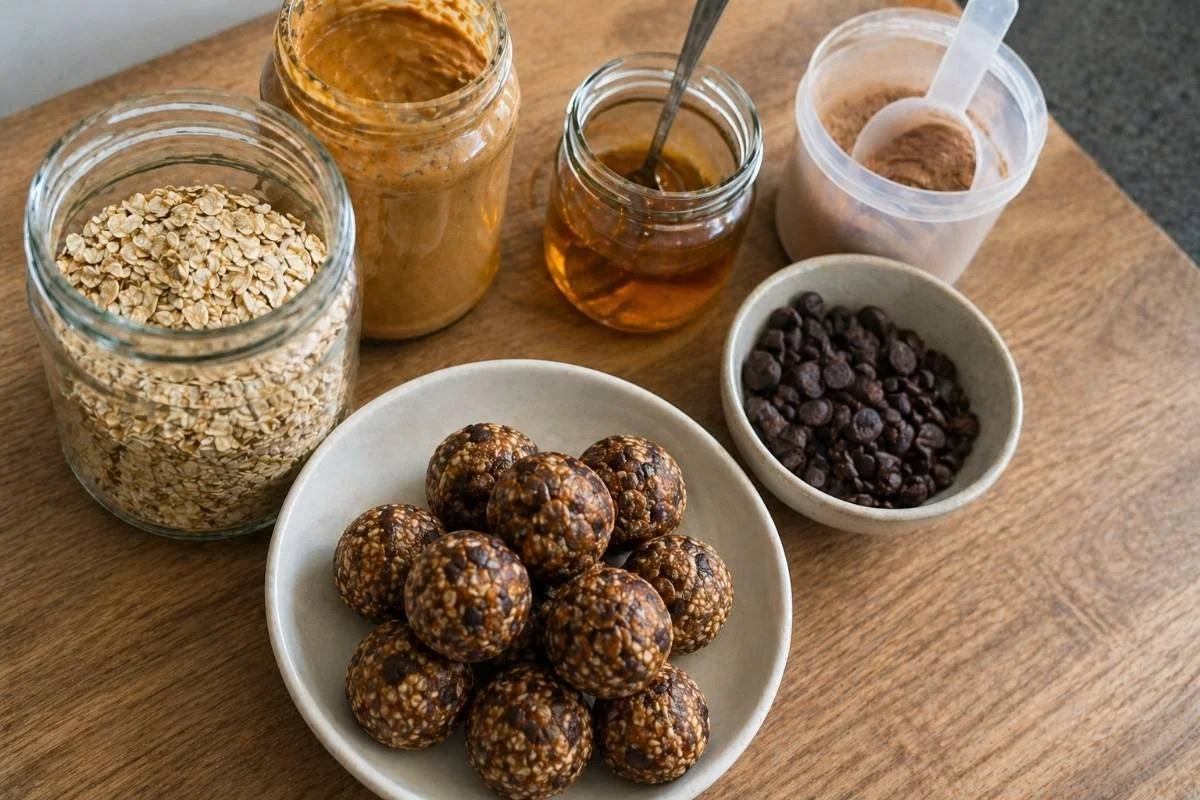
Simple Recipe: Energy Balls for Padel
Quick Energy Balls for Padel Players
Makes: about 12 balls · Time: 10 minutes plus 30 minutes chilling
Ingredients
- 1 cup oats
- 2 tbsp peanut butter
- 2 tbsp honey
- 1 scoop protein powder
- A handful of dark chocolate chips
Method
- Mix all the ingredients in a bowl.
- Roll into small balls.
- Chill for 30 minutes.
Why it works: Easy to carry, quick to eat, and a practical mix of carbohydrates and protein for long sessions or tournaments. They keep in the fridge for up to a week.
Key Takeaways
Fuel before you feel tired
Match your eating to your match time, especially for evening games
Prioritise carbohydrates for energy and include protein throughout the day
Most social matches don’t need mid-match food, but long matches and tournaments do
Start hydrated and take the heat seriously
Keep everything simple, familiar and repeatable
Save the Cheat Sheet
📲 Tip: Press and hold (or right-click) the image to save it to your phone for your next match day. Share it with your padel partner!
How I Can Help
I play padel in Barcelona myself, so I know the reality: late matches, long tournament days, summer heat and busy weeks around work and family.
I work with padel players who want more energy in the third set, better recovery between sessions, fewer cramps, or to lose a few kilos without losing power on court. Together we build a plan around your match times, your training and the way you actually like to eat. No rigid diets, just practical changes that fit your week.
I work in person in Barcelona and online, in English and German.
👉 Book a free call or message me on WhatsApp and tell me about your game.
FAQ
What should I eat before a padel match?
A carbohydrate-based meal with some protein 2-3 hours before is ideal, such as oats with yoghurt and fruit, rice with chicken, or toast with eggs. If you only have 30-60 minutes, a banana, a few dates or a yoghurt works well.
How long before padel should I eat?
Aim for a full meal 2-3 hours before and a small snack 30-60 minutes before if you need it. Larger, fattier or high-fibre meals need more time to digest, so keep those further away from match time.
What should I eat before an evening padel match?
If you play at 8 or 9pm, lunch is too far away to fuel you. Have a proper snack around 6pm, such as a small sandwich, yoghurt with fruit and granola, or rice cakes with nut butter and banana. Then eat a light dinner with protein and carbohydrates afterwards so you sleep well.
Do I need to eat during a padel match?
For most social matches of 60-90 minutes, no. A good pre-match meal and regular sips of water are usually enough. Small snacks such as fruit or dates help during longer matches, tournaments, back-to-back games or very hot conditions.
Do I need electrolytes when playing padel?
Not always. Water is enough for most recreational matches. Electrolytes can help during long sessions, tournaments, hot weather, heavy sweating, or if you are prone to cramping.
Can I play padel on an empty stomach?
Some people feel fine, but most players react faster and stay more consistent with at least a little carbohydrate beforehand. Even a banana or a yoghurt can make a difference, especially for longer or more intense matches.
Is a beer after padel bad for recovery?
One beer is unlikely to undo your recovery, especially if you rehydrate and eat a proper meal first. Larger amounts of alcohol can slow muscle recovery and disturb sleep, so go easy if you are playing again the next day.
What are the best snacks for a padel tournament?
Bananas, dates, rice cakes, energy balls, yoghurt, smoothies, dried fruit and simple sandwiches all work well. Choose foods that are easy to digest and familiar to you, and eat small amounts often rather than one big meal between matches.
View scientific references
Barnes MJ. Alcohol: impact on sports performance and recovery in male athletes . Sports Medicine. 2014;44(7):909–919.
Cádiz Gallardo MP, Pradas de la Fuente F, Moreno-Azze A, Carrasco Páez L. Physiological demands of racket sports: A systematic review . Frontiers in Psychology. 2023;14:1149295.
Guijarro-Herencia J, Mainer-Pardos E, Gadea-Uribarri H, Roso-Moliner A, Lozano D. Conditional performance factors in padel players: A mini review . Frontiers in Sports and Active Living. 2023;5:1284063.
Jäger R, Kerksick CM, Campbell BI, Cribb PJ, Wells SD, Skwiat TM, et al. International Society of Sports Nutrition position stand: Protein and exercise . Journal of the International Society of Sports Nutrition. 2017;14:20.
Kerksick CM, Arent S, Schoenfeld BJ, Stout JR, Campbell B, Wilborn CD, et al. International Society of Sports Nutrition position stand: Nutrient timing . Journal of the International Society of Sports Nutrition. 2017;14:33.
Mellado-Arbelo O, Baiget E. Activity profile and physiological demand of padel match play: A systematic review . Kinesiology. 2022;54(1):51–61.
Sawka MN, Burke LM, Eichner ER, Maughan RJ, Montain SJ, Stachenfeld NS. American College of Sports Medicine position stand: Exercise and fluid replacement . Medicine & Science in Sports & Exercise. 2007;39(2):377–390.
Thomas DT, Erdman KA, Burke LM. American College of Sports Medicine joint position statement: Nutrition and athletic performance . Medicine & Science in Sports & Exercise. 2016;48(3):543–568.